Bookeeping vs. Accounting vs. Finance


To me you cannot separate operations and finance. For a person to successfully operate any type of business, they must understand the basic principles of the bookkeeping, accounting,vand finance as well as the relationship these numbers have to operations in the past present and future. One skill set without out the other is pretty much useless and the business will pretty much be doomed. While I have never met a single person that is the whole package, a complete understanding of what needs to be done is what is most important. The place that started self-evaluation, understand what your skill sets are and what skill sets you do not have. Next Step would be to surround yourself with people that have the skill sets you are missing. That does not mean that you do not have to understanding of the other people's roles. For example, 25 Years ago we decided to build our first website. I found myself in financial meetings trying to make decisions at presentations when I had no idea what these people were even talking about. The first thing I did was went out and learned to build websites. I had no desire to be a web designer. My desire was to be able to understand what was being presented to me and make an educated decision on what to do and how much to spend. That was my fiduciary duty to my company. See as we continue through this page, the numerous skill sets needed to run a business cannot be held by one individual. A deep understanding respect for others roles are what is needed. The ability to translate these ideas into financial plans is what's most important. Also, the ability to monitor the financial history of the company, its past performances, and the results of past decisions will guide you to future successful decisions.

The 7 Basic Accounting Principles

The seven basic accounting principles—Economic Entity, Monetary Unit, Going Concern, Time Period, Cost, Revenue Recognition, and Matching—provide the framework for recording financial data accurately. These rules ensure consistency, objectivity, and transparency in financial reporting for businesses.
The 7 Basic Accounting Principles
-
Economic Entity Assumption: The business is treated as a distinct entity, separate from its owner's personal financial affairs.
-
Monetary Unit Assumption: Only transactions that can be expressed in monetary terms (e.g., dollars) are recorded in the accounting records.
-
Going Concern Principle: Financial statements assume the business will continue to operate indefinitely and not liquidate in the near future.
-
Time Period Assumption: The life of a business is divided into artificial, regular time periods (e.g., monthly, quarterly, annually) to report performance.
-
Cost Principle (Historical Cost): Assets are recorded at their original purchase price rather than their current market value.
-
Revenue Recognition Principle: Revenue is recognized and recorded when earned, not necessarily when cash is received.
-
Matching Principle (Expense Recognition): Expenses must be matched and reported in the same period as the revenues they helped generate. Other key principles often included are Consistency (using the same methods over time), Materiality (focusing on items that matter), and Full Disclosure (reporting all relevant information).
Three Basic Financial Statements

The three basic financial statements are the Income Statement, Balance Sheet, and Statement of Cash Flows. These documents measure a company's financial health, performance, and cash movement over time. They are interconnected, with net income flowing from the income statement to the balance sheet and cash flow statement.
-
Income Statement (Profit & Loss): Reports revenue, expenses, and net income/loss over a specific period, showing profitability.
-
Balance Sheet: Provides a snapshot of assets, liabilities, and shareholders' equity at a specific point in time.
-
Statement of Cash Flows: Details the cash inflows and outflows from operating, investing, and financing activities.
Balancing the Books
Debit-Left | Credit Right

"Balancing the books" originated from 15th-century accounting, specifically the double-entry bookkeeping system popularized by Luca Pacioli, where every transaction required a debit and credit entry to match. It refers to the manual process of ensuring that total expenses (debits) equal total income (credits) in a ledger, creating a balanced, accurate financial record.
Key Historical and Functional Origins:
-
The Ledger System: Traditionally, accountants maintained large physical books (ledgers) for recording financial transactions. At the end of a period, they would sum the left (debit) and right (credit) columns to ensure they matched.
-
Double-Entry Necessity: The phrase is rooted in the accounting equation: Assets = Liabilities + Equity. If the sides did not "balance," an error had occurred that needed correction.
-
Checkbook Reconciliation: The term also stems from checking personal accounts, where individuals compared their own record of transactions against bank statements to ensure they matched.
-
Modern Usage: While largely automated by software today, the term remains to mean verifying financial records for accuracy.
Balance Sheet
-
Asssts = Debits
-
Liability = Credits
-
Equity =Credits
Profit and Loss Statements
-
Sales = Credit
-
Expenses = Debits
-
Sales - Debits = Net Profit or Loss
The Net Profit or Loss on the P&L also appears in the equity section of the Balance Sheet. This is the key element that ties the two reports to each other.
Restaurant Business Operational Segments


Many people think that they understand restaurant accounting, but in reality, very few people are really good at it. That problem stems from the fact that a restaurant is three types of business rolled up into one.
-
Your back in the house is basically a manufacturing plant
-
The front of your restaurant is a retail sales operation
-
And you're also in the hospitality service business
Financial performance needs monitored in three different ways for these three segments of your restaurant.
Most people will analyze the general categories in a profit loss statement and think they're managing their business. What I truly don't like are financial people that think the numbers are the end of all and miss the most important two factors that drive the financial success of your business, your employees and your customers. Remember this, “the quickest way to fix costs is to fix sales.
Now let's break it down into the three segments:
-
Manufacturing accounting is probably one of the most difficult or lengthy accounting processes. True, manufacturing accounting takes into consideration units of power, the occupancy cost, whether you own or rent your factories. Labor has to be worked into each unit. If you don't include all your cost when accounting for a product or a widget, you are basically going to be cheating yourself and most likely be unsuccessful. Obviously in the restaurant situation in the back of the house where you're manufacturing the food that people are about to eat. It is impossible to figure out all the costs that go into the product. As I said in the beginning, we're going to segment that off and we will only be monitoring our raw product cost of sales, and labor. Remember, in manufacturing, the whole plant's doing one thing, manufacturing, but only a certain percentage of our square footage will be used for manufacturing in a restaurant. I always suggest that you make the back of the house as small as possible. Big oversized kitchens cost money. It can house too many employees and people tend to get lazy and overstaff. First big issue mistake you can make in designing your restaurant.
-
The second part of the business is the retail operation. We are a retail store. People are buying Finnish products from us. For me, the retail side of the business is solely about sales per square feet. If my dining room is 60% of my retail square feet, I want it to generate 60% of my sales. And if the other 40% of my square footage is my cocktail lounge, I want the cocktail lounge to be generating 40% of the sales. You can manage this if you pay attention. The areas percentage of square feet should equal the areas percentage of overall sales.
-
The final part of the restaurant business is hospitality. Service employees should each be monitored by their productivity, i.e. Sales. Their table turns and average checks are equally important. You need to have a way of also incorporating a customers' happiness, and that does not mean just going to see what my Yelp or Google reviews scores are.
When we get into the reporting section of these lessons, I will explain how to monitor these things appropriately.
Different types of Product Mixes
-
Product mixes and various ratios are great tools to help us analyze many aspects of our business. There are a few styles of products mixes when we are looking at a restaurant business:
-
Revenue Mixes – Food-Liquor-Wine-Beer-Non-Alcoholic-Retail
-
Product Mixes by Category – Steak – sub – Filet Mignon-NY Strip-Rib Eye etc.
-
Room Mixes - What are the percentages of sales from room to room to room as they're part of the whole.
-
Revenue category Mix - how many appetizes we sell vs. entrees vs. desserts per guest? How many cocktails do we sell vs. glasses of wine vs. bottles of wine vs. beers vs. etc.
There's a lot of different ways to slice up a business depending on what you're looking for. So, if your CFO, controller, bookkeeper, accountant, has a P&L review, they have to go past that macro view and look behind or through the numbers. Most financial people will say, you're spending too much money on chemicals. Okay, there's a handy piece of useless information. A professional will say you're spending too much money in chemicals, and here's the 10 things that could cause that to be so high. Now let's go through the list one by one and make sure we know where we are spending too much. That's who I want you to become.

Managers and Routines
No matter what area of the restaurant company you're working in, The key to success is routines. You cannot pick and choose what you'd like to do each day. You need to set up a series of tasks in a rational time order and complete them on a daily basis to truly have control of your business. The place to start is creating yourself a simple chart to make sure that you're not missing anything. It will not take you long before these routines become part of your DNA. Below is an example of routines for daily weekly and monthly tasks:

Inside of your daily routines you want to include certain managerial data that is looked at on a daily basis. Having only managers look at data is short-sighted, Everyone in your operation should beware of the goals and if they are achieving them. A company that holds the data too close to their chest is a company that will never be truly achieve their full earning potential. As we said earlier in these lessons, the restaurant industry has three components, manufacturing, retail, and hospitality. Below are examples of the type of data for each of these areas that should be looked at on a daily basis.
Manufacturing
Purchase rates (Later in these lessons we will define the difference between a purchase rate and cost of goods sold).

Daily and monthly labor costs - In most municipalities the back of the house drives the hourly labor. The front of the house employees are usually at minimum wage or less unless they are at a union situation.

Manager meals and comps (Items are actually made and not paid for they are considered discounts, When items are rung up but never made, They can either be removed or voided) Manager meals in comps should be run up so they are counted for and cost of goods sold, They can be moved to sales returns and allowances at the end of the month and sales tax can be removed and replaced by use tax.

Retail
As I said earlier in these lessons, Most important part of monitoring retail is your sales per square foot. Below is an example of how you can track that:

But their service job is to be a retail salesperson. I personally like to track their performances by their average check.

The removed item report can tell you how proficient server is on the floor.

Hospitality
Usually when a service staff is making errors, a discount log report is a good way of showing how the quality of service and product is doing:

A tip vs. sales percentage is also a good indicator of how well their service skills are and how happy their customers are:

Marketing
This last report I am including because it is a product of service. I have my maître d' asking as many guests as possible how they found our restaurant. While this is done during service, it is invaluable when we market our restaurant. We use our guest note field in our reservation system to capture this data, We then exported into a usable report.


The Credit Card Jungle
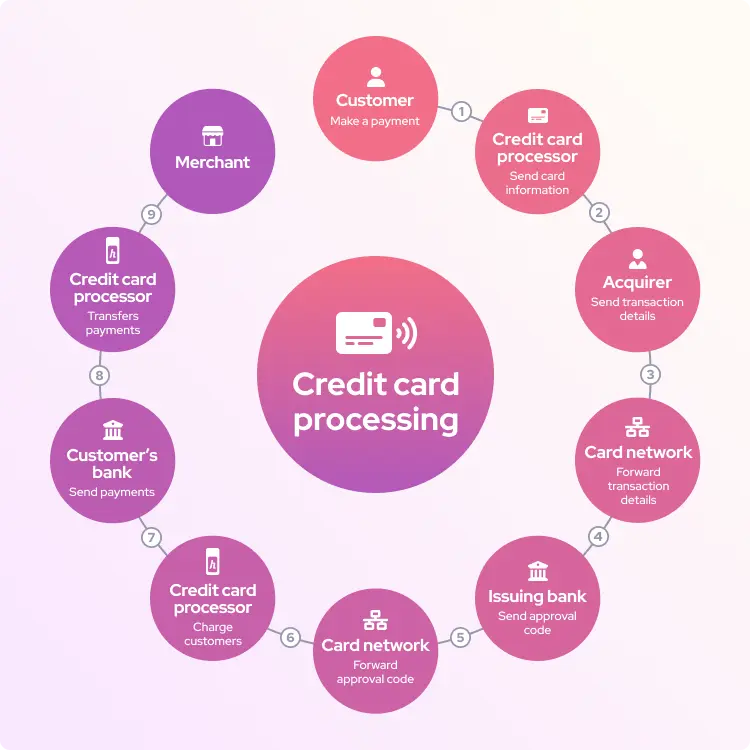
Key Participants Explained:
-
Cardholder: The consumer who uses the card to make a purchase.
-
Merchant: The business accepting the card for goods or services.
-
Issuing Bank (Issuer): The financial institution that grants credit and issues the card to the consumer (e.g., Chase, Citi).
-
Acquiring Bank (Acquirer): The bank that maintains the merchant's account and handles payment deposits.
-
Payment Network (Card Association): Networks like VisaMastercard, or American Express that facilitate the transfer of data between the issuer and acquirer.
-
Payment Processor/Gateway: Technology providers that authorize and settle the transaction (e.g., Stripe, Fiserv).
-
AFP | The Association for Financial Professionals These parties work together in real-time to authorize, clear, and settle transactions within seconds.A credit card sales company is a business that facilitates, processes, or finances electronic payments for merchants. These companies, often called merchant service providers or acquirers, connect businesses to card networks to accept payments via cards or digital wallets. They take a percentage fee per transaction and, in some cases, provide instant cash advances based on future sales
-
Chamber of Commerce +5Key details regarding credit card sales companies include:
-
Merchant Services: They enable businesses to accept credit/debit cards and digital wallets (e.g., Apple Pay).
-
Processing Fees: They charge transaction fees (usually around 2% of the purchase), monthly fees for equipment, or chargeback fees.
-
Cash Advances: Some companies advance funds based on future credit card sales, taking a percentage of daily revenue as repayment.
-
Payment Processing: They act as an intermediary, facilitating the flow of funds from the customer's bank to the merchant's account. Yes, there is a very strong, ongoing trend of credit card processing companies acquiring
-
Point of Sale (POS) companies and software providers. This shift is driven by the desire to merge payment processing with software-driven business management tools, creating "all-in-one" ecosystems. tsgpayments.com
Here are the key aspects of this trend:
-
Software-Led Payments Strategy: Processors are acquiring POS companies to embed their payment technology directly into the software that manages sales, inventory, and customer data. This creates a "sticky" relationship with merchants, reducing churn and increasing revenue opportunities beyond just transaction fees.
-
Higher Revenue Streams: Software-led merchants generate 3.5–4x higher revenue than payments-only merchants, encouraging processors to pivot towards software-driven solutions.+
-
Key Examples of Acquisitions and Partnerships:oFiserv & Clover: Fiserv acquired First Data in 2019, which brought the Clover POS platform under its umbrella, significantly expanding its POS offerings.
-
Global Payments: Acquired Total System Services (TSYS) in 2019, which included the Vital POS system.
-
Worldpay & GTCR: In 2024, GTCR acquired a majority stake in Worldpay to capitalize on the rapid evolution of the merchant acquiring market.
-
Revention/HungerRush: POS companies like these have been acquired to deepen the integration between software and payment processing.
-
Rise of "All-in-One" Systems: The market is moving toward integrated systems (like Toast or Clover) where the POS and the processor are the same entity, simplifying operations for merchants.
-
Private Equity Driven: Much of this consolidation is propelled by private equity firms looking to scale software-enabled payment companies, treating them as "turbochargers" for growth. Why This Trend is Happening
-
Data Access: Integrated POS systems allow for better data analytics and personalized customer experiences.
-
Omnichannel Demand: Businesses need a single system to manage online, in-store, and mobile transactions, which unified POS/processor systems provide.
-
Higher Margins: While hardware sales may have low margins, the subscription software (SaaS) and payment processing bundles offer high-marginAn interchange rate is a fee percentage (plus a small flat fee) paid by a merchant's bank to a customer's card-issuing bank for processing credit card transactions. Set by card networks like Visa or Mastercard, these fees usually range from 1% to 3% of the total transaction amount.
Aspects of Interchange Rates
Purpose: These fees cover the cost of handling, fraud prevention, and authorization.
Recipients: The funds go to the issuing bank (e.g., Chase, Citi) to pay for rewards and, in some cases, interest-free days on credit cards.
Factors: Rates vary based on the type of card (rewards vs. standard), the industry (MCC code), and how the transaction is processed (in-person vs. keyed-in).
-
Transparency: They are considered a wholesale cost to merchants, often passed through directly or structured into tiered pricing by processors.Credit card processors make money primarily by charging merchants a fee for every transaction, typically a percentage of the total sale plus a fixed amount (e.g., 2.9% + $0.30). They also generate revenue through monthly service fees, equipment rentals or sales, setup fees, and penalties like chargeback or PCI or EMV -compliance fees.
-
AFP | The Association for Financial Professionals +2Key Revenue Streams for Processors
-
Transaction Fees (Markup): Processors often charge a "mark-up" on top of the interchange fee (the cost set by card networks like Visa/Mastercard).
-
Percentage-Based Fees: A percentage of the total transaction volume.
-
Flat Transaction Fees: A fixed fee per swipe, dip, or tap.
-
Monthly Subscription Fees: Charges for access to software, reporting tools, or maintaining an account.
-
Hardware Fees: Selling or leasing card terminals and POS systems.
-
Incidental Fees: Charges for PCI non-compliance, orchargebacks. Priicing Models
-
Flat-Rate Pricing: A simple, set fee for all card types (e.g.Square).
-
Interchange-Plus Pricing: The bank's cost (interchange) + a set fee for the processor.
-
Tiered Pricing: Transactions are grouped into qualified, mid-qualified, or non-qualified rates.
A basis point (abbreviated as bps, often pronounced "bips") is a unit of measure in finance equal to 1/100th of 1% or .00001 in decimal form. This and fees are what you need to negotiate.
Two Types of fees, Fixed and Transactions


